July 25, 2026
There is a quiet myth that a beautiful board requires a cupboard full of specialized tools, a different blade for every rind, a dedicated fork for every cured meat. In France, where the plateau de fromages is less a trend than a nightly ritual, the truth is simpler. A good board is built on good cuts. And good cuts come from a small number of knives you actually know how to use.
Here is how to assemble a French-style cheese and charcuterie board around just three Nogent tools and why each one earns its place.
Before any knife touches a rind, decide what the board is for. A board is a conversation, not a buffet. Three cheeses and two charcuterie selections, arranged with room to breathe, will always feel more generous than a crowded platter of a dozen half-thoughts.
Aim for contrast: something soft and bloomy, something firm and aged, something with a little funk. Add a cured meat with fat and a cured meat with spice. Then bring in the supporting cast : cornichons, a spoonful of fruit preserve, a handful of nuts, good bread. The knives don't just cut this food. They set its rhythm.
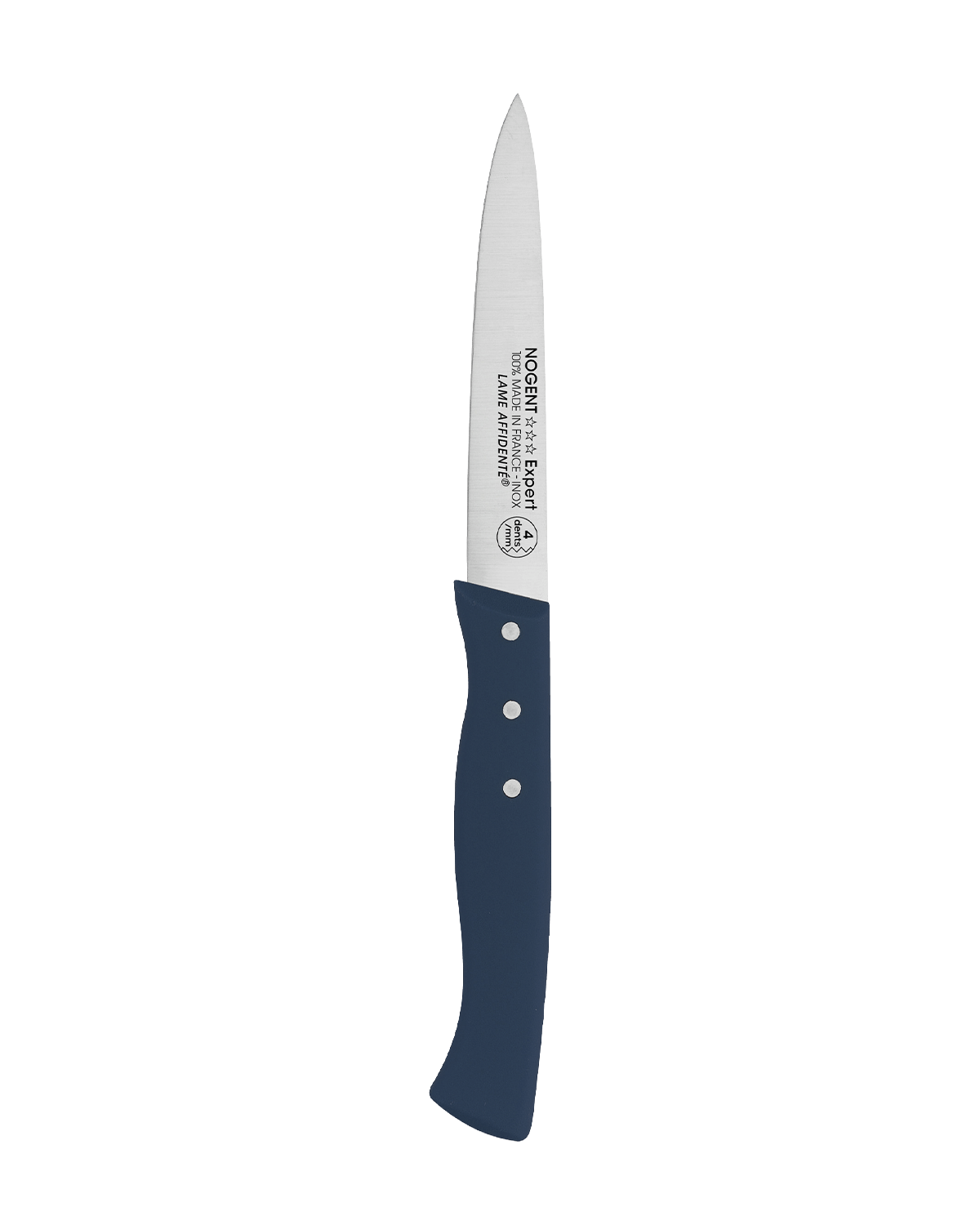
The Nogent paring knife is the workhorse most people underestimate. On a board, it becomes the tool for everything small and exact: trimming a wedge of aged comté into clean batons, coring and quartering fresh figs, halving grapes, peeling a crisp apple into thin slices that won't brown before your guests arrive.
Its ultralightweight design matters more here than it might seem. When you're making twenty small, controlled cuts in a row, a heavy blade fatigues the hand and dulls the precision. A light, sharp paring knife stays honest through the whole board, the first fig looks like the last.
On the board: keep the paring knife with the fruit and the firm cheeses, where detail work lives.
Related articles
Seasonal Produce Prep: Getting the Most From Root Vegetables (and Wasting the Least)
The Backyard Bistro: Why Nogent Bistro Knives Define the Art of Summer Hosting
The Mechanical Cut: Why the Nogent Super Kim Defines Tool Permanence
A proper Nogent table knife does the diplomatic work of the board. It’s the blade you hand to a guest to portion the brie, to spread a soft cheese onto bread, to lift a slice of pâté without mangling it. Unlike a heavy steak knife, a well-balanced table knife glides through a ripe cheese without dragging the rind into the paste.
The French approach is to give soft and hard cheeses their own knife so flavors don’t muddy, but if you’re keeping it to three tools, a single clean table knife handles both, wiped between cheeses. Its comfortable handle means guests reach for it instinctively, which is exactly what you want: a board that invites people in rather than one they’re afraid to disturb.
On the board: rest the table knife across the soft cheeses, blade angled toward the bread.
The third piece is the one people forget until they need it. A Nogent spatula or serving tool is what moves the charcuterie from the cutting board to the platter, lifts a delicate slice of terrine, or transfers a fanned row of salami without breaking the arrangement you just built.
It’s also the tool that keeps the board looking composed as the evening goes on. Guests will always disturb the symmetry; a quick nudge with a serving tool restores order in a second, and the platter looks intentional right up to the last bite.
On the board: keep the serving tool nearby but off the platter, it’s back-of-house, not display.
The instinct, when hosting, is to over-equip. But a board built on three well-chosen knives teaches something the crowded drawer never will: precision comes from familiarity, not from options. When you use the same paring knife for every fig and the same table knife for every wedge, your cuts get cleaner every time.
That’s the quiet logic behind a French kitchen, a few excellent tools, used often, understood completely. Build a few boards this way and you’ll stop thinking about the knives at all. Which is exactly the point.
You can build a complete French-style board with just three: a paring knife for fruit and firm cheeses, a table knife for spreading and portioning soft cheeses, and a serving tool for moving charcuterie without disturbing your arrangement. More knives mean more washing, not a better board.
Traditionally yes, a dedicated knife per cheese keeps flavors from mixing. But for a simple three-knife board, one clean table knife handles both if you wipe it between cheeses. Reserve separate knives for boards with several strong or pungent cheeses.
Cut firm cheeses and fold charcuterie up to a couple of hours ahead and keep them covered in the fridge, but bring cheese to room temperature about an hour before serving for the best flavor. Cut fruit like apples or pears last to avoid browning, or toss slices in a little lemon juice.
A board involves many small, repetitive cuts : trimming, coring, halving. A heavy blade tires your hand and your precision slips, so the last cut looks worse than the first. An ultra lightweight knife stays controlled through the whole job, keeping every piece consistent.
Polypropylene-handled Nogent knives tolerate the dishwasher, though hand-washing is always gentler on any blade. Wood-handled knives should be hand-washed and dried promptly, never left to soak or put in the dishwasher.
Explore the Nogent paring knives, table & steak knives, and serving tools to build your own board.