I. The Physics of the “Micro-Peel”
In the 2026 kitchen, we define quality not by how much a tool can “hack away,” but by how much it can “leave behind.” As food costs rise and our commitment to “Culinary Upcycling” deepens, the waste-to-plate ratio has become a primary culinary metric. Standard grocery-store peelers are often dull and thick-bladed, forcing the cook to apply excessive downward pressure, which inevitably bites deep into the vegetable’s valuable flesh.
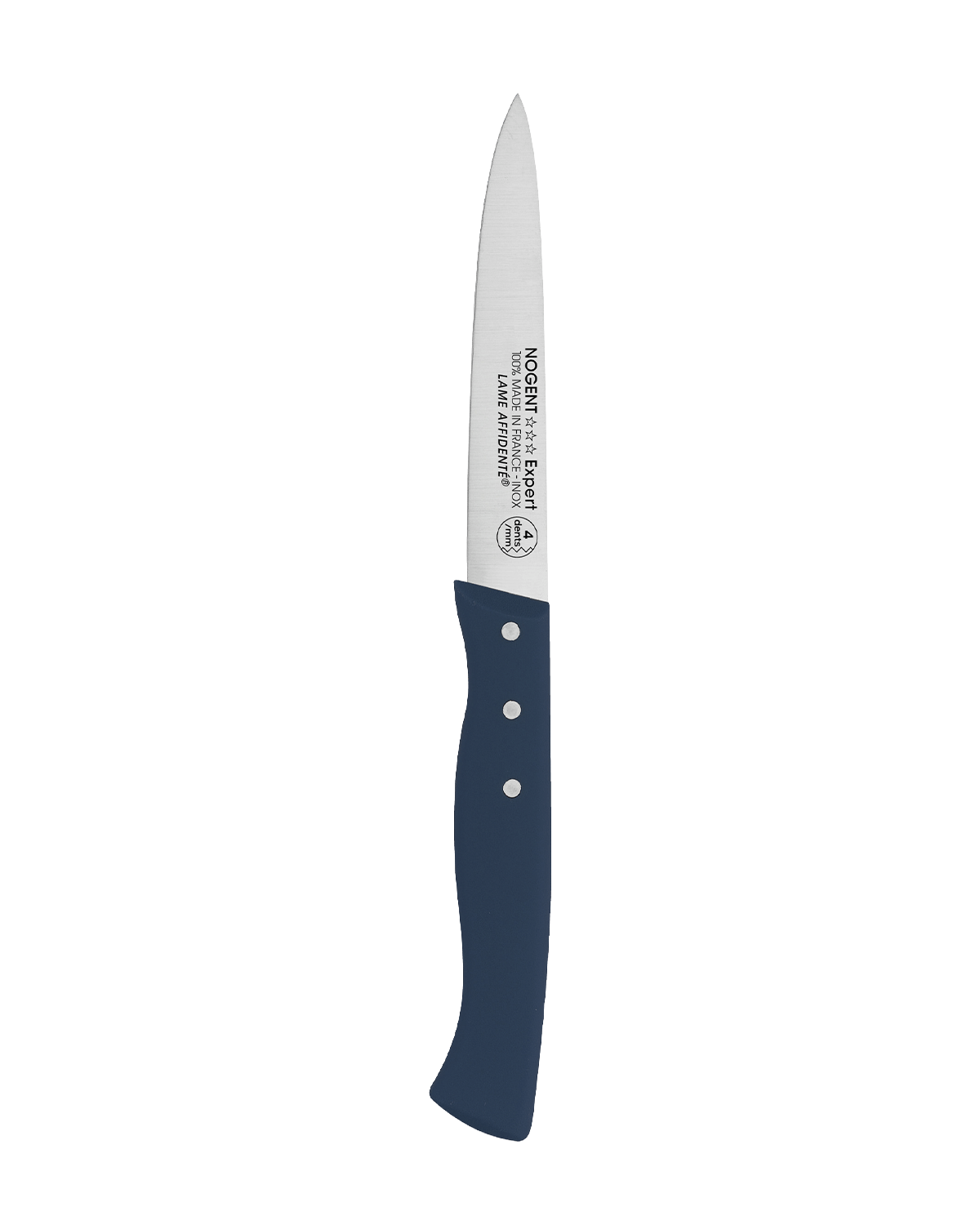
The technical superiority of the Nogent peeler is rooted in its Double-Edge Precision. The blade is milled from high-carbon French molybdenum-vanadium stainless steel. Unlike single-bevel blades that require a specific handedness, the Nogent is ground on both sides, allowing for a “Floating Suspension” action. This means the blade follows the organic, uneven contours of a spring carrot, a delicate ramp, or a woody asparagus stalk without catching, gouging, or “jumping” across the surface.
Because the blade is surgically sharp—milled to the same standards as Nogent’s world-class professional paring knives—it “slices” the skin at a microscopic level rather than “tearing” it. This minimizes the bruising of the underlying cells. For the 2026 cook, this means prepped vegetables stay vibrant and crisp longer, preventing the premature oxidation that turns spring produce dull before it even reaches the pan.
II. Ergonomic “Flow”: The Extension of the Hand
The 2026 “Kitchen Reset” movement prioritizes tools that eliminate the “friction” of cooking. Heavy, bulky peelers with oversized rubber grips lead to hand fatigue during large-scale prep. Nogent takes the opposite approach, focusing on Lightweight Dexterity. By using a specialized, high-density polypropylene, Nogent creates a handle that is virtually weightless, turning prep work into a fluid extension of the cook’s own movement.
In 2026, we understand that mass does not equal quality in precision tools. The lightness of the handle allows for a “Pencil Grip,” giving the cook the dexterity of a surgeon. This is particularly vital when prepping delicate early-spring crops like baby radishes or thin-skinned rhubarb. Furthermore, the double-edge design is natively ambidextrous. Whether you peel toward you (European style) or away from you (American style), or use your left or right hand, the blade maintains the same perfect angle of entry.
III. Sustainability as Performance: The Anti-Disposable
In 2026, the most sustainable act a consumer can take is to buy a tool once. The “disposable gadget” cycle—where plastic-and-rubber peelers are replaced every 18 months—is a relic of the past that the Kitchen Reset seeks to abolish. The heart of the Nogent tool is chrome-plated French steel that resists the “pitting” and dulling common in the inferior alloys used in mass-market cookware. It is a “Generational Investment” designed to maintain its edge through thousands of pounds of produce.
The choice of high-grade polypropylene for the 2026 kitchen is a choice for Hygienic Permanence. It is non-porous and fused directly to the blade’s tang, leaving no gaps where moisture or bacteria can collect. It is 100% dishwasher safe, satisfying the high-efficiency needs of the modern home apothecary. By allowing for thinner peels, the Nogent tool directly reduces the volume of food waste in the home, ensuring the most nutrient-dense layers—often found just beneath the skin—stay on the plate.