Mastering the Grips: Techniques for Nogent’s Ergonomics
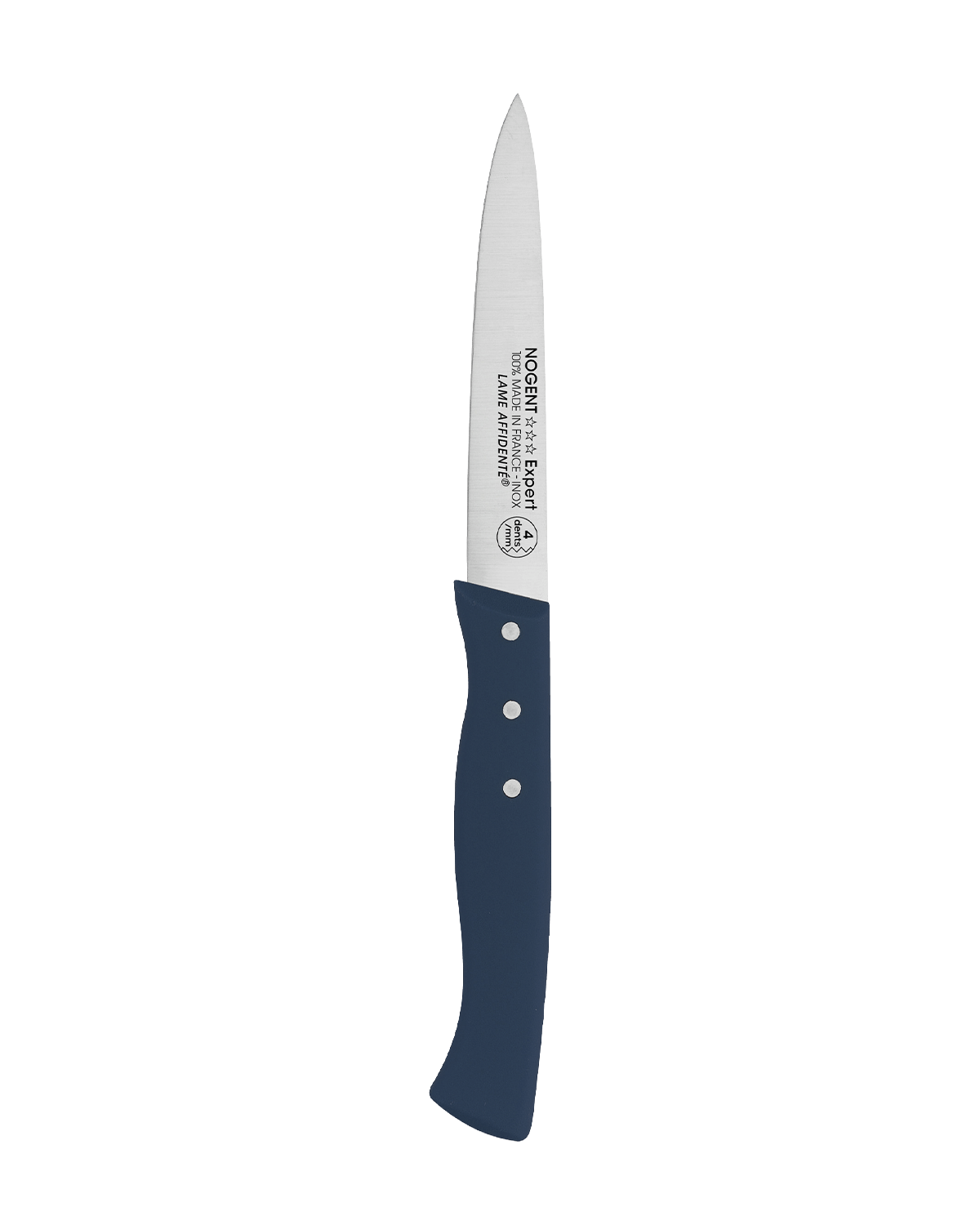
The secret to maximizing the paring knife’s potential lies in adapting your grip to the task at hand. The ergonomic design of a Nogent knife, with its hand-finished handle and perfect balance, makes these techniques feel natural and intuitive.
The “Away” Grip: This is the grip for peeling and is the most common use of the paring knife. Hold the fruit or vegetable in your non-dominant hand and the knife in your dominant hand, with the blade facing away from you. Your thumb acts as a guide, providing stability as you use short, precise strokes to peel the skin off. This grip is perfect for tasks like peeling potatoes or carrots and ensures maximum control and safety.
The “In-Hand” Grip: For intricate, delicate work, this is the master’s grip. Hold the knife in a pen-like fashion, with your thumb resting on the spine of the blade. This grip gives you unparalleled dexterity, allowing you to perform delicate tasks like hulling strawberries, carving decorative garnishes, or de-veining shrimp with confidence. The unique Nogent ferrule, or “Queue de Cochon” (pig’s tail), is a traditional feature that enhances this grip’s comfort and balance, making the knife feel like a natural extension of your hand.
The “Claw” Grip: For small-scale chopping on a cutting board, use your non-dominant hand in a claw shape to hold the food, tucking your fingertips in for protection. Use the paring knife’s nimble tip and short blade to chop or slice with speed and accuracy, relying on its nimbleness to get the job done efficiently.
The Nogent Difference: A Legacy of Precision
These techniques are powerful in any hands, but they become an art form when paired with the quality of a Nogent paring knife. Our commitment to craftsmanship is evident in every detail:
The Hand-Ground Blade: Every Nogent blade is meticulously hand-ground by a master artisan. This creates a razor-sharp, durable edge that holds its sharpness longer and slices cleanly without tearing.
High-Carbon Stainless Steel: Our proprietary blend of high-carbon stainless steel ensures the perfect balance of hardness and corrosion resistance, making the blade both strong enough to hold an edge and durable enough for everyday use.
The Iconic Ferrule: The “Queue de Cochon” ferrule is more than just a beautiful detail. It is a functional element of our traditional construction that contributes to the knife’s perfect balance and secure, comfortable grip, allowing for greater control during delicate tasks.
By appreciating the simple elegance and profound functionality of your Nogent paring knife, you are not just preparing food; you are engaging in a timeless tradition of French precision and craftsmanship. You are using a tool that is a direct result of a century of dedication, and with it, you can transform the mundane into the magnificent.
Frequently Asked Questions (FAQ) about the Nogent Paring Knife
Is a paring knife really necessary if I have a chef’s knife?
Yes, a paring knife is essential. While a chef’s knife is excellent for general chopping, its size makes it unsuitable for detailed work like peeling, coring, and creating delicate garnishes. The paring knife is specifically designed for these tasks, offering superior control, precision, and safety.
What is the “Queue de Cochon” ferrule and what is its purpose?
The “Queue de Cochon” (French for “pig’s tail”) ferrule is a distinctive metal ring at the base of the Nogent knife’s handle. It’s a traditional design feature that provides strength, enhances the knife’s balance, and contributes to a more comfortable, secure grip, particularly for “in-hand” tasks.
How do I keep my Nogent paring knife sharp?
Regular honing with a quality sharpening steel will keep the blade’s edge aligned and sharp. For more intensive sharpening, we recommend using a fine-grit whetstone or having it professionally sharpened once a year, depending on use.
What’s the best way to store my paring knife to protect its blade?
Storing your knife in a knife block, on a magnetic strip, or with a blade guard will protect its edge from being dulled or damaged by other utensils.