The Geometry of the Edge: Why Nogent is the Essential Partner for the 2026 Vegetable Revolution
January 12, 2026
As we move deeper into February 2026, a significant shift has taken hold in kitchens across the globe. We have moved past the era of "meat-and-three-veg" and entered the age of Vegetable-Forward Structure.
Related articles
Seasonal Produce Prep: Getting the Most From Root Vegetables (and Wasting the Least)
A French Cheese & Charcuterie Board, Built Around Three Knives
The Backyard Bistro: Why Nogent Bistro Knives Define the Art of Summer Hosting
According to the latest culinary forecasts, the most successful home cooks this year are those who treat vegetables with the same reverence and technical precision traditionally reserved for fine cuts of meat. To achieve the textures dominating 2026—the charred cabbage “steaks,” the ultra-thin fennel shavings, and the precision-diced root vegetables—you need more than just a sharp knife. You need a tool designed with a specific edge geometry. This is why the Nogent Classic Series, forged in the historic cutlery hub of Thiers, France, has become the essential partner for the modern, intentional kitchen.
1. Beyond Sharpness: Understanding the Nogent Taper
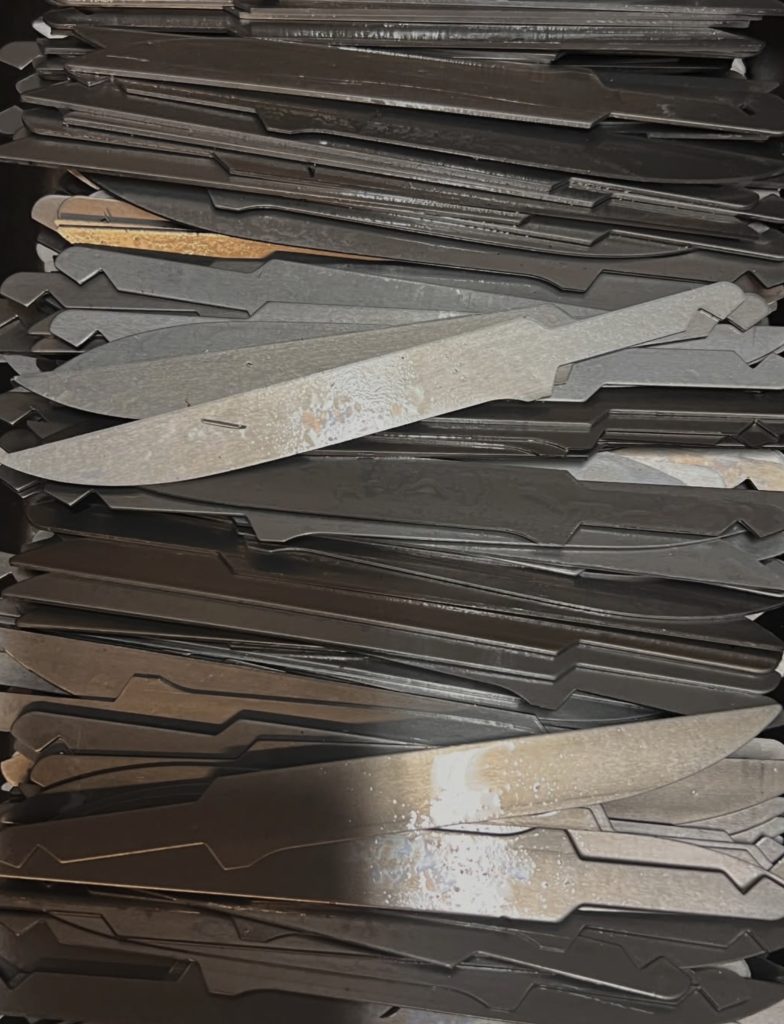
In 2026, the savvy home cook understands that “sharp” is only half the story. The other half is drag. Most mass-produced knives are “stamped” from thick sheets of steel with a blunt, steep edge that wedges into vegetables rather than slicing through them. This “wedging” effect crushes the delicate cell walls of your produce, leading to moisture loss (the “puddle” on your cutting board) and a dulling of the natural flavors.
Nogent knives are celebrated for their extraordinary taper. Each blade is ground with a precision that becomes thinner toward the edge and the tip. This allows the knife to glide through a dense butternut squash or a crisp radicchio with minimal resistance. When you use a Nogent, you aren’t forcing the blade; you are guiding it. This precision preserves the integrity of the ingredient, ensuring that the juices stay inside the vegetable, resulting in a more vibrant color and a crisper “snap” after cooking.
2. The Paring Knife: The Precision Tool for “Culinary Upcycling”
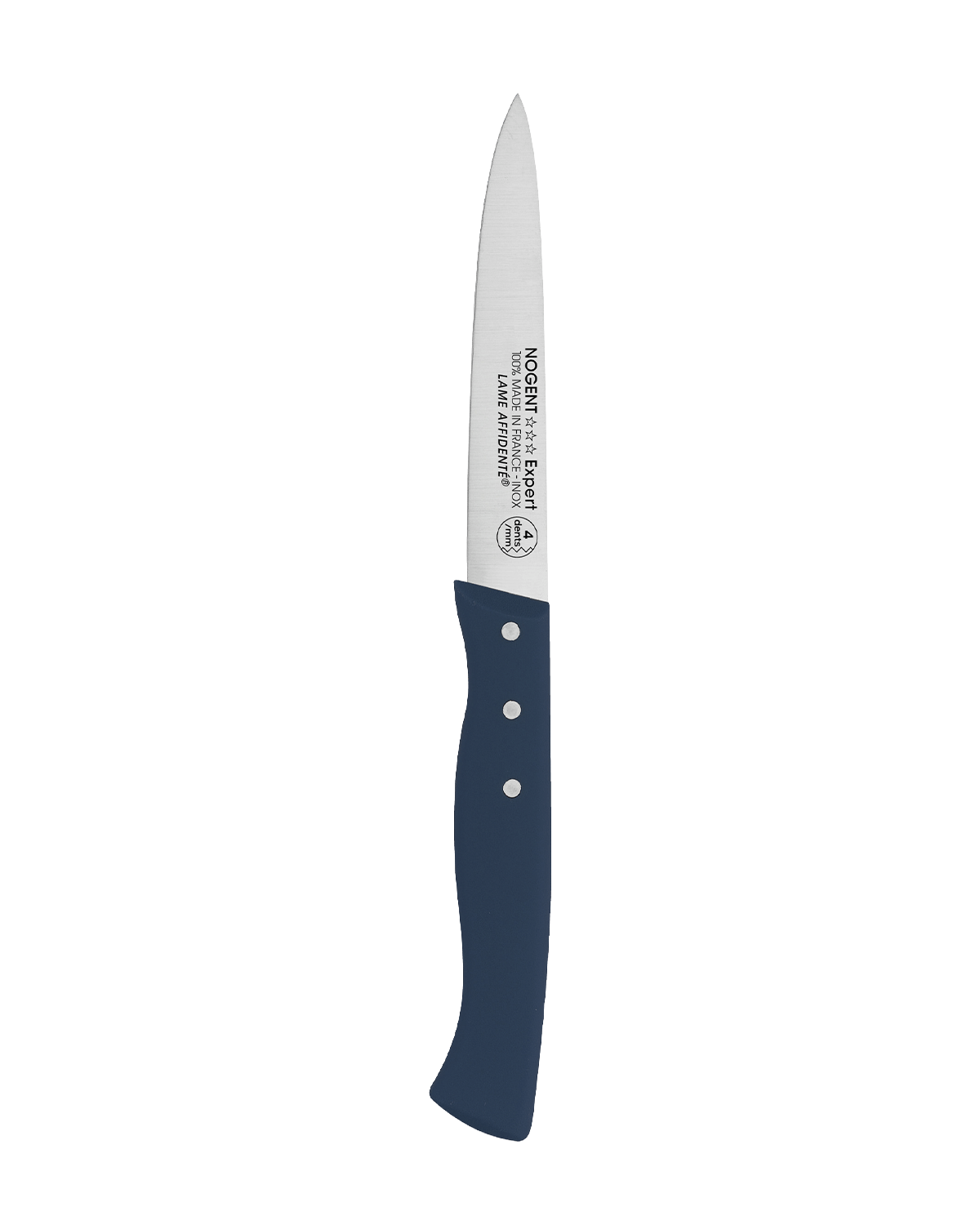
One of the strongest trends of 2026 is Culinary Upcycling—the zero-waste philosophy of using every part of the plant. We are no longer discarding broccoli stalks, herb stems, or citrus rinds; we are transforming them into slaws, pestos, and garnishes. This level of detail requires the “scalpel of the kitchen”: the Nogent 9cm Paring Knife. With its legendary French high-carbon or stainless steel blade and ergonomic hornbeam handle, it is the perfect tool for the intricate work of upcycling:
Micro-Dicing: Turning tough kale or chard stems into a fine dice for “stem-top” sautés.
Fluted Garnishing: Creating the “Michelin-star” visual touches—like fluted mushrooms or citrus “twists”—that elevate a simple home meal into an event.
Pith-Free Peeling: The sharpness of a Nogent allows you to remove the zest of a lemon or the skin of a ginger root with such precision that you leave the bitter white pith behind.
3. High-Carbon vs. Stainless: Choosing Your 2026 Philosophy
In 2026, we are seeing a massive return to High-Carbon Steel, particularly among the “Kitchen Reset” community. Nogent’s high-carbon range offers a different relationship with the cook. Unlike stainless steel, high-carbon iron “speaks” to you. It develops a unique patina over time—a dark, protective layer that tells the story of every onion sliced and every roast carved.
For those who prioritize absolute, razor-like precision, carbon steel is the choice. It can be honed to a much finer edge than standard stainless steel and is significantly easier to sharpen at home. For those who prefer a “low-maintenance” lifestyle, Nogent’s proprietary stainless steel blend provides the same legendary French geometry with the added convenience of rust resistance. Both represent a rejection of the “disposable” knife sets sold in big-box stores.
4. Ergonomics as a Wellness Choice
The 2026 kitchen is increasingly viewed as a place of Wellness and Ergonomics. We are no longer willing to accept the wrist fatigue and hand cramps associated with poorly balanced, heavy knives. Nogent knives are famously lightweight. This is not a lack of quality; it is a deliberate engineering choice. By reducing the weight of the knife and perfecting the balance at the bolster, Nogent allows the user to engage in “marathon” meal prep sessions—the kind required for a Sunday batch-cook—without physical strain. The traditional wooden handles, sustainably sourced and hand-finished, offer a warm, natural grip that synthetic handles simply cannot replicate.
Paring Knife
$13.00
Wood
Select options
This product has multiple variants. The options may be chosen on the product page
Bistro Knife
$16.00
Wood,Serrated 1mm
Select options
This product has multiple variants. The options may be chosen on the product page
Bread Knife
$35.00
Wood
Select options
This product has multiple variants. The options may be chosen on the product page
Chef’s Knife
$40.00
Wood
Select options
This product has multiple variants. The options may be chosen on the product page
Nogent Precision Mastery FAQs
Why does my Nogent knife feel so much lighter than other professional brands?
This is a hallmark of the French “Thiers” style. Heavy knives rely on gravity and force; Nogent knives rely on sharpness and agility. The lightweight design gives you more control over the tip of the blade, which is essential for the precision-focused vegetable work that is so popular in 2026.
Is it true that I should never put my Nogent in the dishwasher?
Absolutely. In 2026, the “Kitchen Reset” philosophy includes the proper care of tools. The high-heat and harsh detergents in a dishwasher will warp the natural wood handles and dull the fine edge of the blade. Hand-washing and immediate drying is a 30-second ritual that ensures your Nogent lasts for decades.
How often should I sharpen my Nogent?
For a home cook preping daily, we recommend a quick “hone” on a ceramic rod once a week to keep the edge aligned. A full sharpening on a whetstone or professional service is usually only needed once or twice a year, depending on your cutting board material (always use wood or BPA-free recycled plastic; never glass or marble).
What is the “Patina” everyone is talking about with carbon steel?
If you choose a carbon steel Nogent, the blade will change from shiny silver to a matte gray or even blue/black over time. This is not rust; it is a patina. It is a natural oxidation process that actually helps protect the steel from deeper corrosion and prevents a “metallic” taste from transferring to acidic foods. Many chefs in 2026 consider a deep patina to be a badge of honor.
I have small hands; which Nogent is best for me?
Nogent is the preferred brand for those with smaller hands or those who find heavy “German-style” knives intimidating. The 17cm Chef’s Knife is often called the “Universal Knife” because it provides the power of a large blade with the handle diameter and weight that feels secure and nimble in smaller hands.